 English
 Indian
 العربية
 Español
 Deutsch
 Türkçe
 Русский
 Français (Afrique)

The spiritual successor to classic JRPG Wild Arms has seemingly been cancelled, four years after its Kickstarter raised nearly $3 million
Armed Fantasia— which was a spiritual successor to the popular JRPG series Wild Arms and not a first-person shooter starring Mickey Mouse—has been cancelled four years after its Kickstarter campaign raised almost $3 million. sweetbonan.org
As reported by Rock Paper Shotgun, Armed Fantasia is one of several titles for which Digital Bros—the parent company of 505 Games—has decided to "discontinue development of" as revealed in its most recent financial statement.
The project was headed by Akifumi Kaneko, who was the lead designer on the original Wild Arms and served in the same role through to Wild Arms 4. It was formally revealed alongside its Kickstater campaign back in 2022. Unlike most video game Kickstarters, where the money raised is used to fund the game directly, this Kickstarter aimed to fund two JRPG prototypes. One was for Armed Fantasia, and the other was for a proof-of-concept of Penny Blood. Both prototypes, it was hoped, would lead to signing a publishing deal that would provide full funding for each game.
This double Kickstarter went on to raise ¥379,328,385, which converts to just shy of $3 million in 2022 money. Things initially went to plan for both games, with Armed Fantasia being signed by 505 Games, while Penny Blood was picked up by Japanese publisher Dangen Entertainment.Armed Fantasia— which was a spiritual successor to the popular JRPG series Wild Arms and not a first-person shooter starring Mickey Mouse—has been cancelled four years after its Kickstarter campaign raised almost $3 million.
But Penny Blood has seemingly suffered a rocky development, culminating in developer Studio Wildrose suing Dangen Entertainment in 2024 for withholding those Kickstarter funds (which, according to Wildrose, Dangen and its CEO assisted in managing). At present. It isn't clear what state the Penny Blood JRPG is now in, though in a Kickstarter update from March this year, project lead Matzuo Machida stated that they have since released a book and are "holding discussions to begin production on new Penny Blood content".
Armed Fantasia, meanwhile, missed its originally planned launch date of March 2025. One year later, Kaneko explained in the aforementioned Kickstarter update that the team had "completed what is known as a Vertical Slice build, which includes the main scenario for Armed Fantasia along with the core gameplay systems", and that this build was "submitted to the publisher"—which presumably refers to 505 Games, though Kaneko does not specify this.
Despite completion of this build, the post exhibits signs of a strained developer/publisher relationship. Kaneko opened the post by apologising for "not providing updates according to the schedule we originally set" and stated that "discussing matters like this goes somewhat beyond the authority I've been given."
Kaneko also said that his ability to disclose information about the project is "heavily influenced by the publisher's strategy", but he reassured backers that the development team is "not facing these challenges alone." Clearly, Digital Bros had a change of heart at some point in the last six months.
Best cozy games: Relaxed gaming
Best anime games: Animation-inspired
Best JRPGs: Classics and beyond
Best cyberpunk games: Techno futures
Best gacha games: Freemium fanatics
Uncharted 2's brilliance isn't just about guns and trains, it's about people
The PS3's legacy may very well be the perfection of the tightly focused 10-hour story campaign. If you define it that way, then Uncharted 2: Among Thieves could claim to be the game of that generation; not the best game, but the one that is emblematic of tightly bound adventures built on the thrills of big worlds and bombastic set-pieces. Naughty Dog's matinée revival has moments of technically astounding action; a lead character capable of carrying an almost unheard-of tonal range of tension, comedy and tragedy, where comparable blockbusters do anger as one long machine-gun burst; plus it embraces ideas of storytelling and entertainment that trigger a rare investment in its cast. It is, in other words, a beautiful game that is also very good at people.
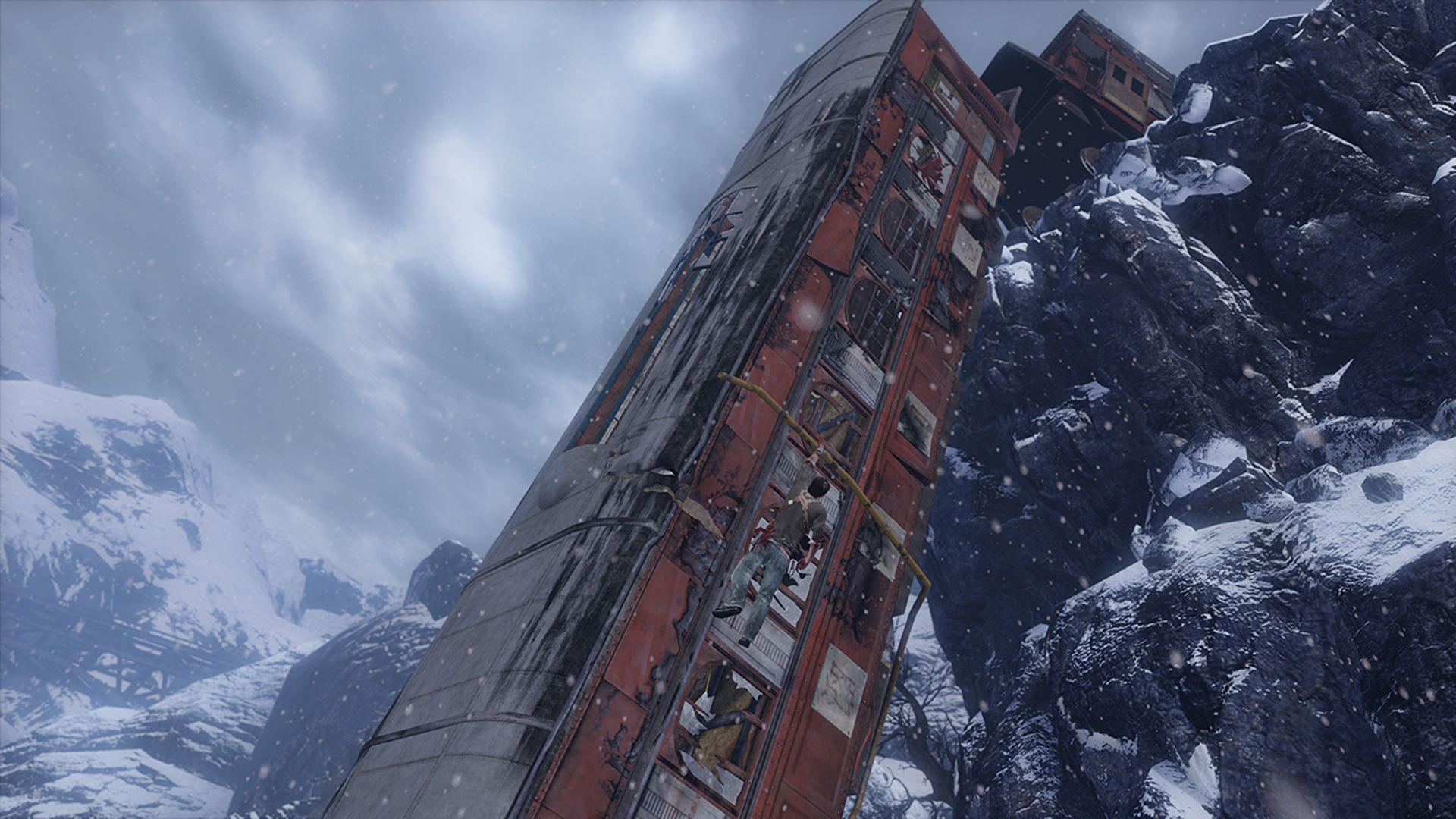
Indeed, it's accomplished at almost everything. Uncharted 2's opening displays a casual confidence of craft and an eagerness for experimentation, breaking in at the story's halfway point and reintroducing us to hero Nathan Drake with snapshot characterisation: he's battered ("That's my blood"), blithe ("That's a lot of my blood"), and, suddenly, he's upside down, a perspective yank turning a stationary train carriage into a vertiginous shaft. Drake plunges past seats and into the first of many hyperbolic translations of cinematic devices – here, the teetering mountainside vehicle, but later a moving train, the unpinned grenade, and last-gasp fingertip handholds.

There's something overtly cinematic in that opening: the formalist interruption, a trick instinctively taken from the splice-and-join of film editing; the precariousness of the train, a literal cliffhanger. And it's generally agreed there's something overtly cinematic in Uncharted 2 itself. The game is sandy adventure and sunset romance as seen down the sights of a pistol or on flickering screens since long before Indiana Jones, harking back to the time of Gunga Din. It is also the problematic culmination of Hollywood's decades-long flirtation with games in the obsessive search for synergy.
All of which is to say that Uncharted 2 not only bears highly visible influences from the movies, the basic colour of its world taken from the themes and tokens of big-screen romantic adventure, but that Naughty Dog's reverence for story might have produced the closest thing to convergence between film and games that doesn't involve a cabinet spinning a LaserDisc to create a cartoon dragon. The studio has embraced the craft of storytelling as taught by the film industry, and emerged with a new production process that devotes a sustained, expensive amount of time (the irony of that synergistic urge – there is no shortcut to convergence) to performance capture, to workshopping and rehearsal with actors on a digital soundstage.
The result is not a revolution. Uncharted 2 does not solve the inelegance of the cutscene, and still needs to interrupt itself to tell a story. And it does not broaden the corridors of that tightly focused 10-hour experience – the game is relentlessly linear, a gilded cage of invisible walls and beautifully textured boundaries. This is where Uncharted 2's cinematic-ness slides from cool observation to criticism. Is it even a game, really? It's so on-rails.
Clickety-clack, Oh crap!
Let's talk about trains, since we seem to be back on one. Walter Murch, editor of Apocalypse Now, once drew a link between the railway and film, between clickety-clack technologies that run along tracks and their shared sense of perception and mechanical possibility. It is, he said, to do with a way of seeing the world. "There is the idea of the voyage. Every voyage is a story."
This idea runs through Uncharted 2. The train wrecked and suspended in that opening is reanimated to become the major action beat of the game's second act, where it carries Drake on a journey to catch up with his own story. Consciously or not – and it's hard to think it could have been totally unintentional – Uncharted 2 has internalised one of the great symbols of cinema, one of the first objects to be filmed in Lumière's L'arrivée D'un Train En Gare De La Ciotat, scattering apocryphal audiences terrified of the onrushing engine, and the heaving iron horse central to the Western. But the train is also a symbol of this generation's great form, the focused, ten-hour single-player campaign – these rails might leave little room for deviation, but they offer a hell of a ride. This is still a game, just a different form of play, one closer to the cinema, built on spectatorship and sympathy, an act of mimesis.
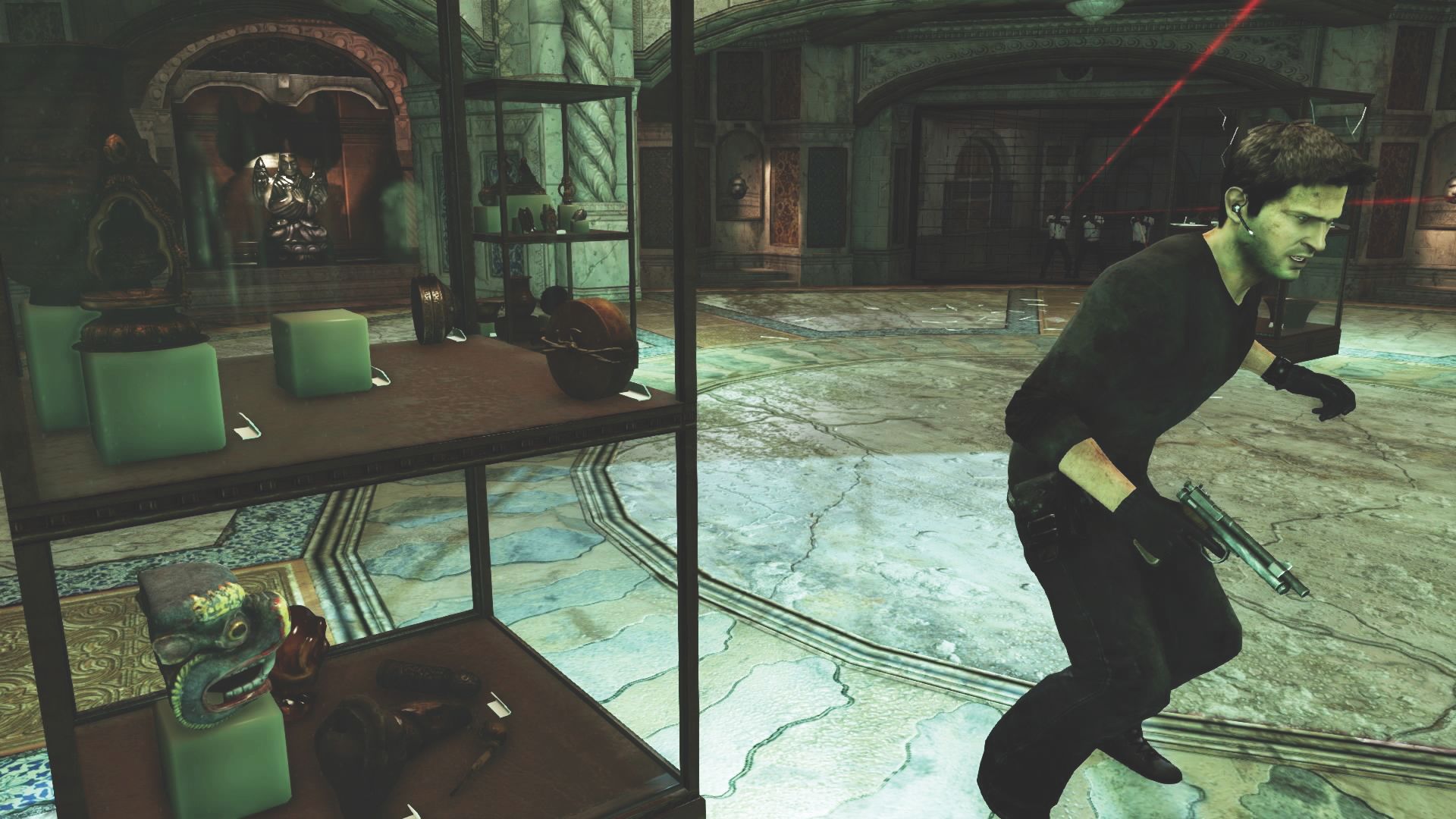
The meat of Uncharted 2's gameplay comes in the form of combat. Away from the much-discussed cutscenes and linear acrobatics, its gunplay offers the most options for interaction and player choice. While there's an irony that, as far as a player is concerned, Nathan Drake's only means of expression is through violence, what's noteworthy is the character of that violence. The combat has a swagger and roll that suits the rangy, improvisational Drake. Aiming eschews deadeyed precision and Drake's reticule seems to swing wide and free over his shoulder, making for frantic Hollywood firefights of dashes between cover and scattered gunfire punctuated by devastating explosions and showstopping punches. It's imprecise but charming, and while it isn't perfect, it might be the ideal fit for this kind of story.
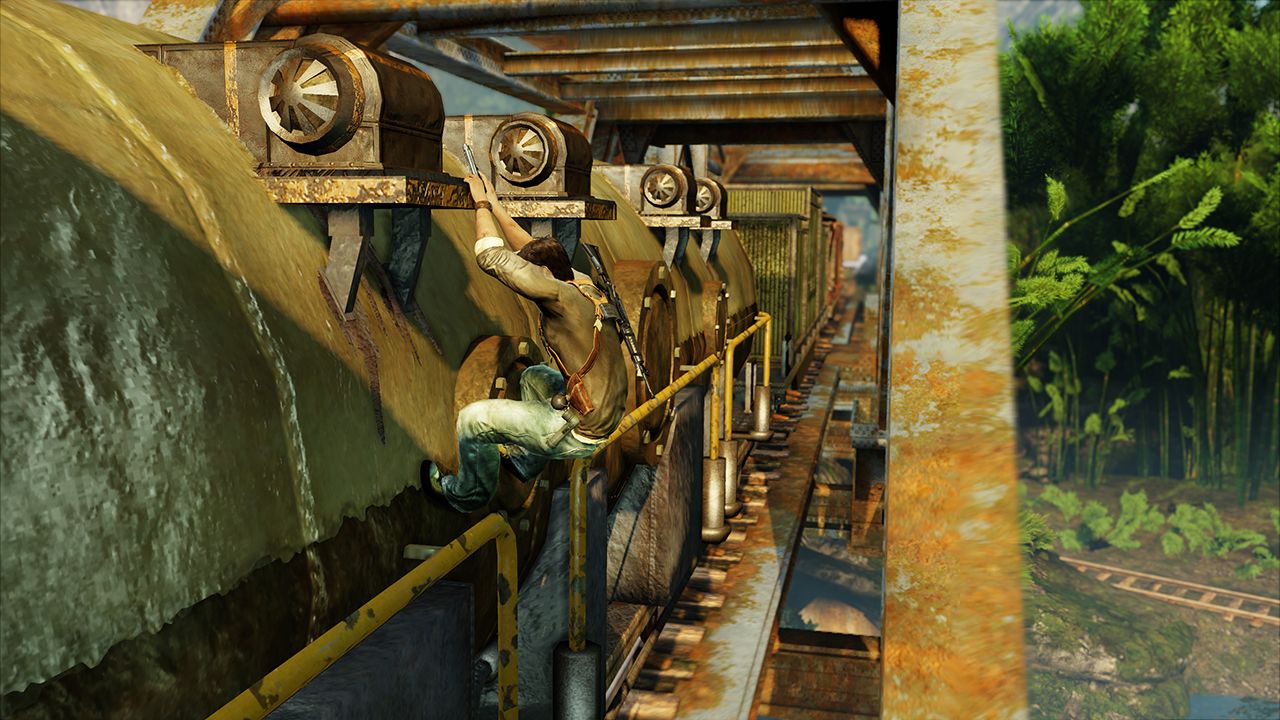
When it's not being a symbol of ambition and convergence, Drake's train journey is the most astonishing few minutes of play on PS3 - and again when it released as part of the Uncharted Nathan Drake Collection on PS4. The train rattles through a jungle so apparently endless it ceases to be anything other than real, while Drake leaps, slugs and hip-fires his way from carriage to carriage, everything feeling detached and independent, dynamic and precarious.
This is something Uncharted 2 does with confounding regularity: delivers moments that are impossible to play without clocking a jolt of conspicuous technical achievement. It's there in the opening, as the camera rushes outward to reveal a cavernous drop and Himalayan scale.
It's there as Drake is hounded by a helicopter over the baking rooftops of Kathmandu, racing through capsizing buildings and into impossible landings. And it's there as a tank attacks a mountain-top village, punching through stone-stacked houses and chasing Drake along walls and up stairways with spitting rakes of machine-gun fire. Uncharted 2 emerges from Naughty Dog's conception of itself as a company. It's a company that tells stories, but also one driven by technology and a belief that technological achievement, spectacle, can be beautiful in its own right.
Not trains, but people
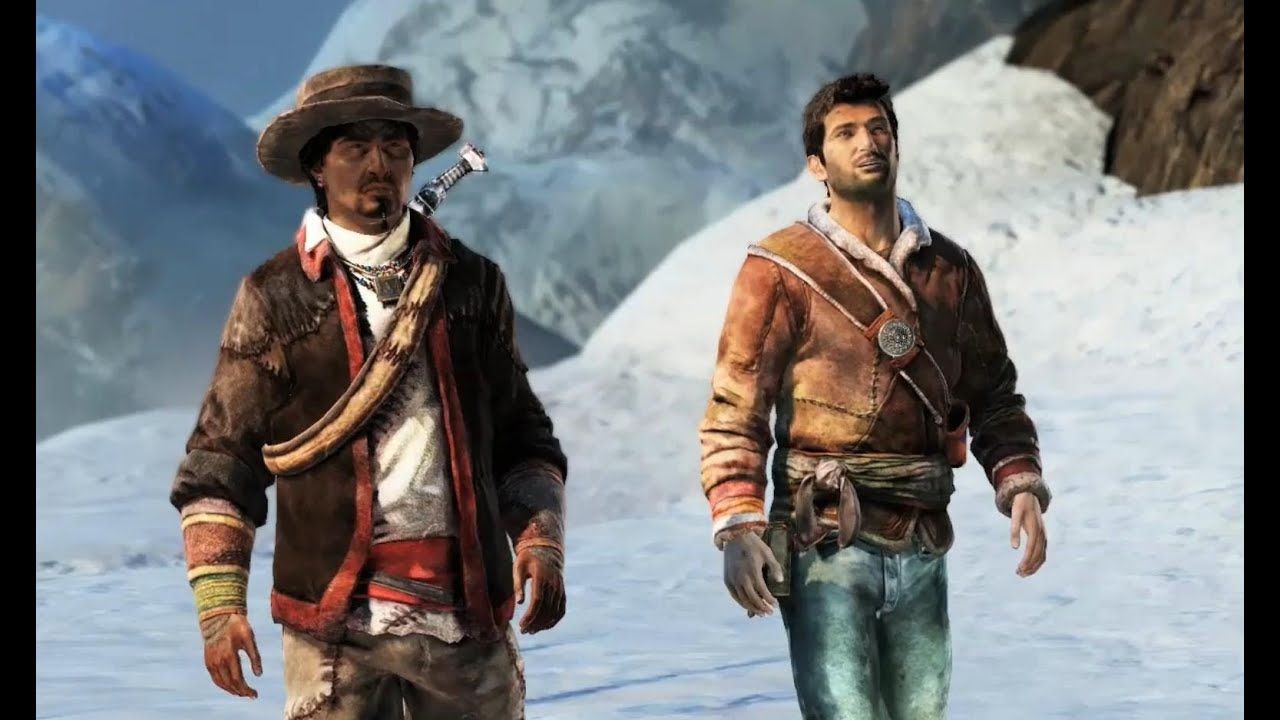
Ultimately, though, what makes Uncharted 2 truly remarkable is its people, who are as bright and memorable as any of the things that crash or blow up inside it. Take Tenzin the Tibetan Sherpa, who finds Drake in the snow following his train derailment and brings the injured stranger to his village in the Himalayas (and then, admittedly, helps him blow up that tank).
His wordless friendship with Drake is forged in a single level (and not even one of the game's best), as they traverse ice caverns and encounter yetis, building trust through cooperation. The relationship is inspired by Ico, PS2's fairytale of companions and castles, and went on to inform The Last of Us. It's an act of emotional play, of attachment and sympathy – and this sympathy, the game discovers, provides a more urgent motivation for gameplay than any regular power fantasy or destructive urge. When the tank arrives, it threatens Tenzin's daughter, and destroying it becomes an act of loyalty – it's not meaningless fury, but directed, nuanced outrage. This is cinematic play.
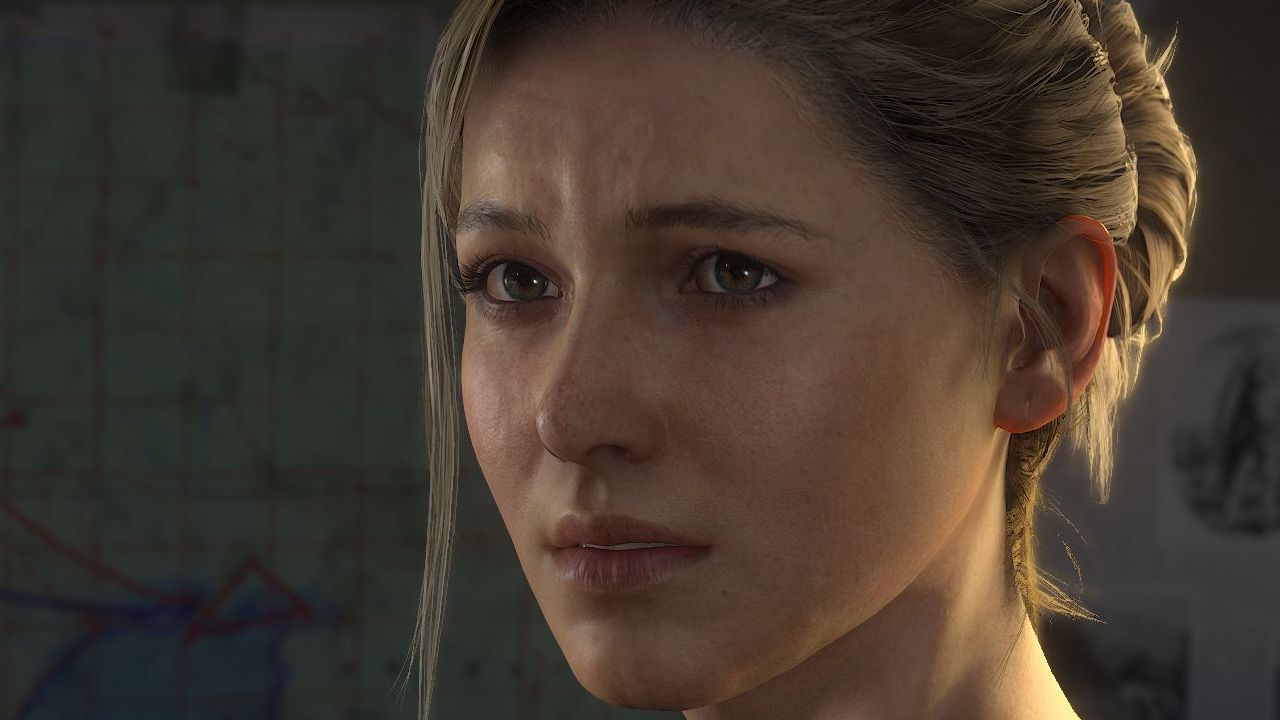
As well as mystical mountain men, Uncharted 2 also delivers on overlooked basics. The women in Drake's life are unusually formidable. Chloe, played by Claudia Black, is marked by an uncommon depth of motivation. She's not defined by her feelings towards Drake, but ambiguously attracted to him, another man and, crucially, her own best interests. She's believable, unpredictable, and dangerous. On the other hand, series mainstay Elena, played by Emily Rose, is a blonde love interest in a game about guns and endless action. But she's also sceptical and strong, and so when the series does finally bring her and Drake together romantically at the close of this game – the first didn't consider it essential – it feels earned and touching. Their relationship is a two-way street of humor and humanity, and is a greater payoff than any climactic boss battle.
At the very epicentre of Uncharted 2's achievement is Nathan Drake himself. He is not only likeable, but well liked. This is no easy thing to achieve in videogames, and it makes so many others possible. Bland heroes proliferate because of the dangerous logic that we'd rather play as polite aggregations of nothing in particular than as people who are definitely not us. Drake overflows with personality – a function of smart writing, but also, it's hard not to think, of a performance process that gives the game's actors, and Nolan North in particular, a chance to pour more of themselves into each character.
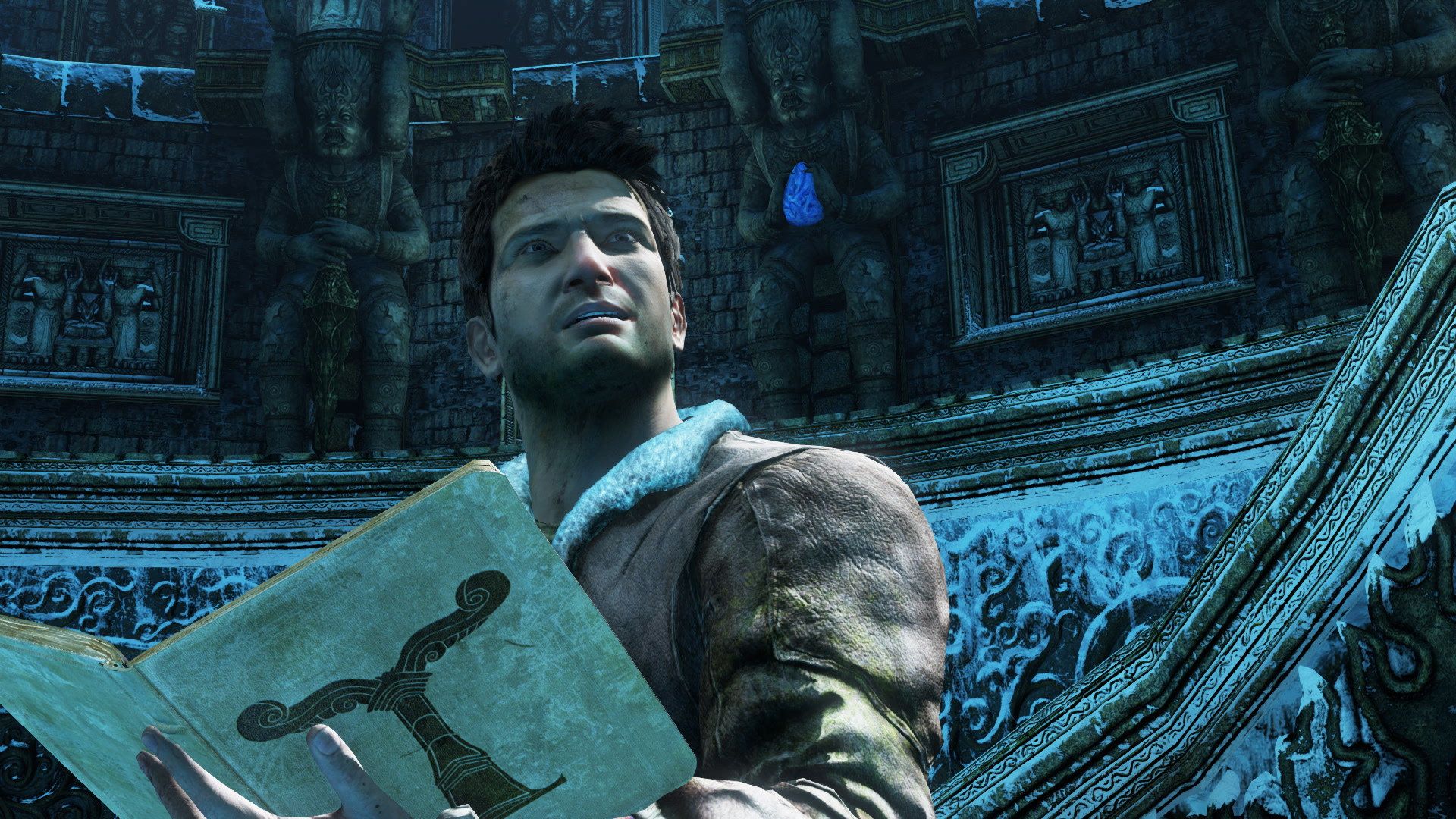
When Tenzin brings Drake back to his village, and after his recuperation, Drake wakes up and wanders through the houses, mountains on every side. As he meets Tenzin's people, the button for a melee attack becomes the button to shake hands, or to salute, or to play football with children. Just for a few moments, a square-jawed hero is capable of interacting with his surroundings by reaching out and making connections rather than swinging fists and breaking faces. And just for a moment, Nathan Drake gets to simply exist. It's so quiet in the village. He can stand and breathe. He can smile and be human.
This is to call attention to Uncharted 2's storytelling and all-round craft, rather than a suggestion that humanitarian positivism is the bedrock of acing the third-person shooter. And it's certainly not an attempt to reconcile the contradiction of this being the standout moment of a game about killing hundreds of soldiers – it can't be done, and Uncharted 2 doesn't have all of the answers. But it does have the imagination to offer us the possibility that things could be different, and it remains remarkable as a game driven by technology that succeeds on the grounds of its humanity.
This Uncharted 2: Among Thieves article was first published in issue 275 of Edge Magazine. To get more like this delivered straight to your doorstep (or digital device) consider subscribing to Edge.
William Pugh, co-designer of The Stanley Parable, has over 1,600 hours in Dota 2: 'It's not a game made of love. It's a game fuelled by hate and a desire to conquer'

Welcome to Disk Cleanup, our regular weekend feature delving into the PCs of PC gaming luminaries. Come back every weekend to read a new interview, digging into the important questions, like "How tidy is your desktop?" and "What game will you never uninstall?"
William Pugh grew up on a diet of shareware Mac titles like 1993's Scruffy versus the Invaders from Mars, but his earliest PC gaming memory is engaging in annelid antics in Worms 4: Mayhem—his first encounter with online multiplayer: "I remember playing that for the first time with random matchmaking," he says. "I think it was a 1v1 or whatever, and you're face-to-face with a complete stranger … I remember that being a kind of door opening for me."
That door would lead Pugh into the cartoonish arenas of Team Fortress 2, which in turn introduced him to the Source engine mapping community. Eventually, this brought Pugh in contact with fellow modder Davey Wreden, with whom he would write and design The Stanley Parable—2013's gleeful poke at player agency, and a remake of Wreden's mod of the same name.
Following The Stanley Parable's success, Pugh founded Crows Crows Crows, which specialises in comic adventures such as Dr Langeskov, The Tiger, and the Terribly Cursed Emerald, the VR game Accounting+, and stealth sequel The Stanley Parable: Ultra Deluxe.
Pugh is currently working on his "next big game" with Crows Crows Crows, as well acting as producer on upcoming PS5 exclusive Hunter's Moon, which he describes as a "historical folk horror game". But he took a break from all that to guide me along the yellow adventure line running through his Steam library.
What game are you currently playing?
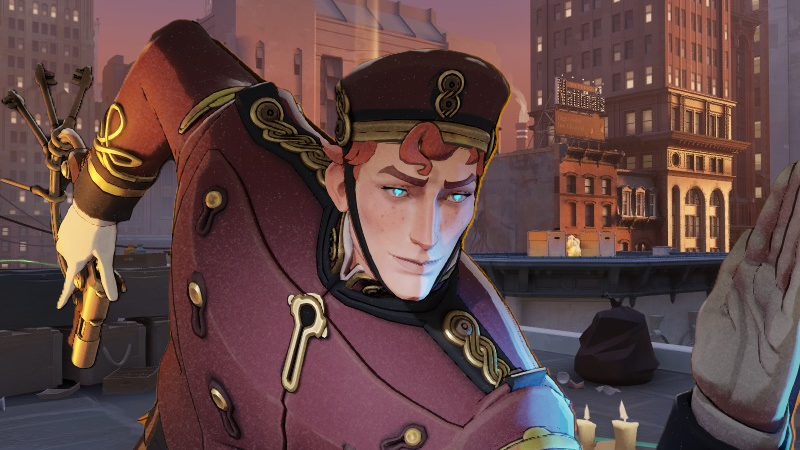
I'm playing a lot of Deadlock. It's my third job. I'm a recovering Dota 2 addict. I'm mostly off now. But the thing is, I never quite got with Overwatch. I must have a few hundred hours in Overwatch. None of the other hero shooters kind of work for me. But Deadlock is like Dota, but with a load of the pointless crap that's just accumulated in the MOBA genre taken out. Mana? Bye-bye. Creep stacking? Bye-bye.
A lot of the useless rubbish, they've done a good job of slicing that out. The characters are fun. Maybe they won't completely screw it up when they get to monetisation on it. But right now, it's kind of pure. There's only one skin per hero. Everybody feels like they're working at it and discovering it. It's really fun to play in a duo lane with a friend.
What was the previous game you played, and is it still installed?
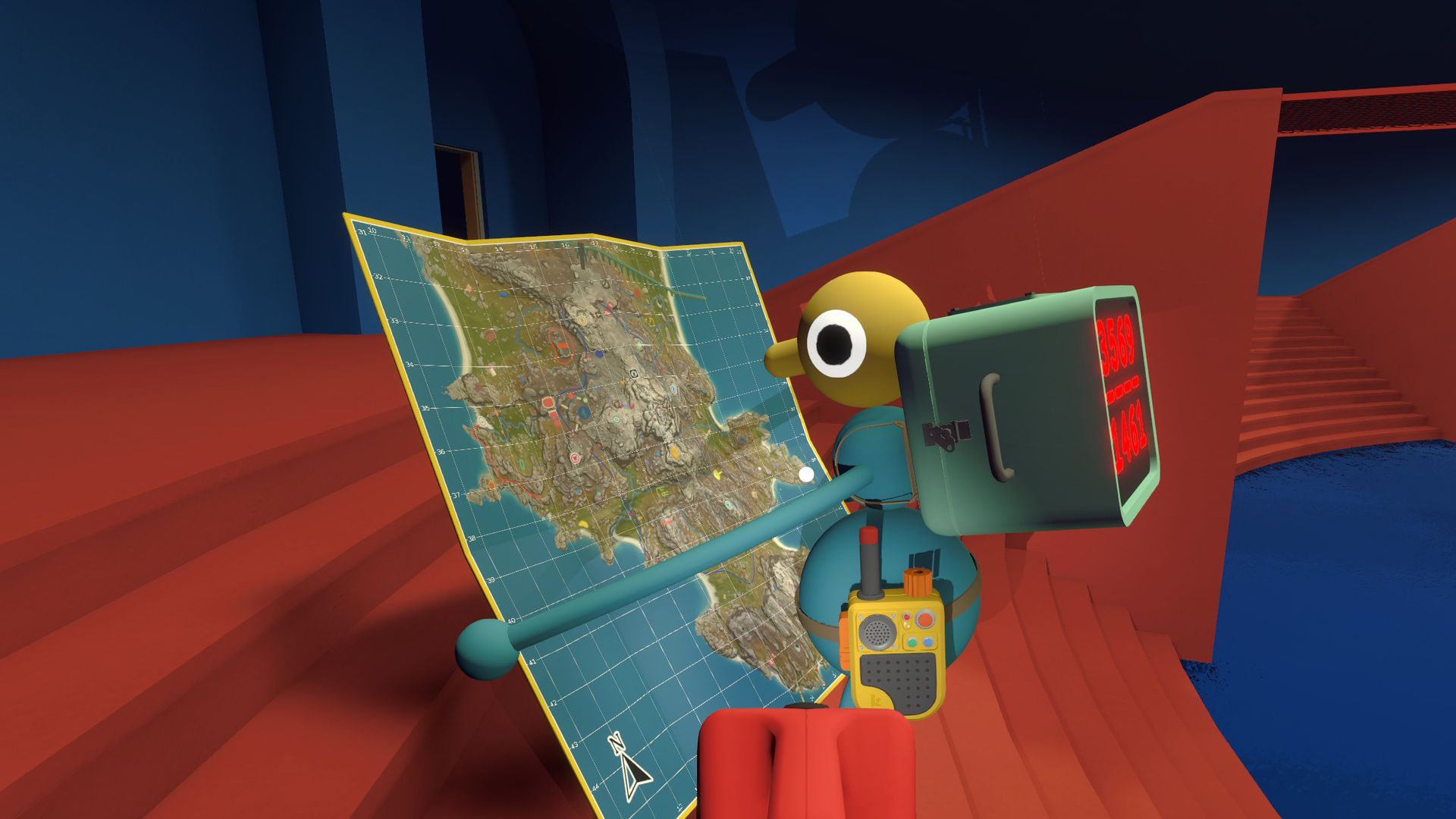
Me and my friend group are working our way through Big Walk, obviously. Damn! What a game! House House, they're too good.
It's interesting—and no hate on anybody involved, I love it, I love every game developer, but as a PC gamer, I saw the Big Walk announce trailer something like two years ago at some games [event], then Peak came out a suspicious amount of time later, and I'll admit my first [thought] with Peak was like, "Man, this is fucking Big Walk at home, but shipped a year faster."
The initial premise of Big Walk was, it's local, play it with your friends, it's got spatial audio and you're exploring a world. And Peak just seemed to ape that in every regard. Then Peak spawns the whole friendslop—I mean, I went through walking simulator, so I feel like they have to be called friendslop, you get assigned your name as a genre—but I felt like that all exploded, and I felt like, "Ah, Big Walk's gonna get left behind in a way. They've missed the magic."
But fuck! What a game! That's got to be game of the year for real. It's really special. They took their time with it. They didn't get spooked by everything moving ahead … it has gameplay that seeps into the way you are talking to each other, and it's really beautiful.
Don't get in your head, boys. Make a sequel. Make Big Walk 2! Just make Bigger Walk. Don't think about it too much. It's a winning formula.
What is the oldest game (by release date) currently installed on your PC?

Maybe Team Fortress 2. That's perma-installed on my computer.
Where to begin? I won a Saxxy award that I still have in my Steam inventory. It turns people gold. It's a replacement for every class's base melee weapon. So I tend to play Engineer and Spy. Those are my two main dudes. I have 1583 hours in there. I was an idler for the first round of hats. I used the idle program. I admit it. I've served my time, and I'm sorry to all the people who played normally and got hats the normal way. If it makes anything better, I've never got an unusual hat, despite my 1500 hours and super-limited Saxxy award.
I've been playing it since 2008. It's what got me properly into mapping, which is what got me properly into working on The Stanley Parable. It's just one of my great faves. It's probably my game of all time. Loads of people felt this way, and like I said with Worms, this kind of just levelled it up. It's like, 'Oh, it's a whole team of people working together.' You could speak online. I was part of a community server that did trial runs for maps. So you could make a map, a work-in-progress thing, and they put it on the server and people could play it—that community-based stuff was incredible.
It's a bit crazy now. They lost something of the art style along the way …. Going back to it, it's an absolute cesspit. You'll hear shit on public matchmaking where it's like, "These people need to be in jail" …. But in terms of games being made as pieces of art that are also spaces for human beings to connect with each other and have fun and to unwind and blow off some steam, it's a real 10 out of 10 goats for me.
I appreciate what they're doing with Deadlock. It's great. But what we really need is Team Fortress 3, and I'll die on that hill.
What is the highest number of hours you have in any given game, according to Steam?
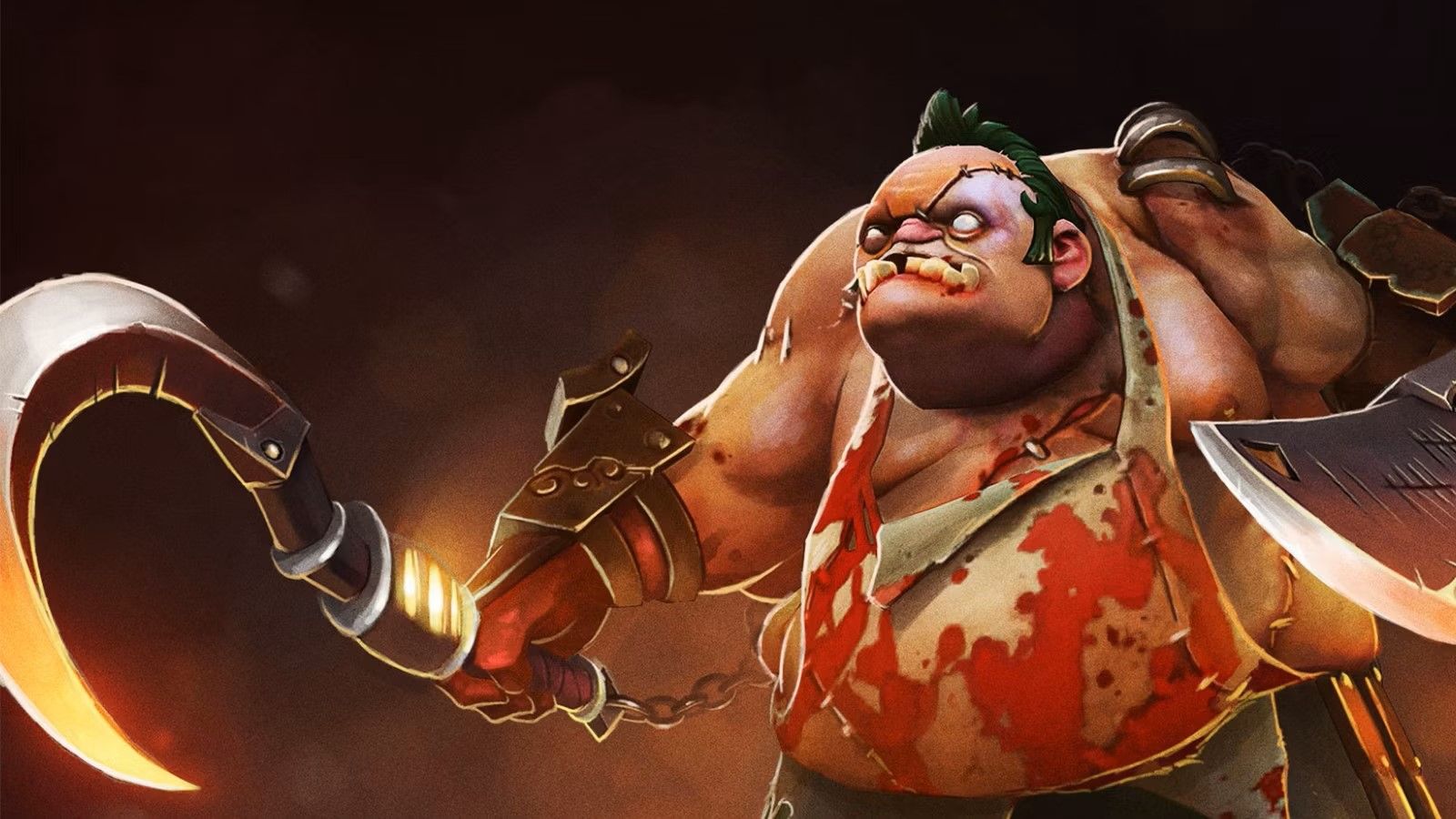
Dota 2 is 1,603 hours … I want to say TF2, but it's not true. It's Dota 2. It's like a drug.
It's interesting because there's no other game that even comes close to this volume of time. But if you ask me, "Did you have a good time playing Dota 2?" The answer is "no". The answer is "fuck that fucking game".
My teammates were feeding. They weren't supporting. When I was supporting, my carries weren't carrying. There were people who weren't in position. People who went too far out, people who were diving who had no business diving, people whose item picks were stupid.
Even thinking about it now, I've got to turn my fan on. I'm getting a little bit sweaty and a little bit pissed off. I'll say it—fuck everybody who plays Dota 2. If they're good at the game, fuck them. They've got no lives, and they should just get off it. It's what started this whole AI shit. If you remember, OpenAI, one of their earliest things was they made a bot that could beat a pro.
It's not a game made of love. It's a game fuelled by hate and a desire to conquer. It's like chess. I played chess as a child, and there's sweaty people who play chess. But at least you're not playing chess with people and then when you make a mistake, they get on voice and they're like, "Yo, this is exactly how you're fucking up. Stop fucking up and wasting an hour of my life."
But I was never any good, which is the saddest fucking thing. That you spend 1,600 hours of your life and you're not actually any good at it. Goddamn, what a horrible game. I bet in your usual interviews, someone's like, "I've spent 300 hours in this game that I love. When I had this personal tragedy, I would play this game and it helped me get through that." For me, it's like, "Fuck Dota 2, I hate it."
This will be my last thing about it. The reason that it's appealing is that it is so complex and taxing, it takes 100% of your brain power. You cannot be thinking about some other shit that's torturing you while you're playing. It's like you get handed a five-dimensional Rubik's cube, and you're sat solving that for an hour. So that is the good thing about it. If you want to be truly distracted, your brain can't be elsewhere if you're playing Dota 2.
What game will you never, ever uninstall?
Probably TF2. I'm just a Valve fanboy.
What's a piece of non-gaming software installed on your PC that you simply couldn't live without?

Basically Blender. 10 out of 10 for Blender. [It's] open source and it's free.
We need a Blender for literally everything. Like I wish I was on Godot, but I've sunk a bit too much time into Unity in my career. The dev cycles on the games I work on are so long that [for] the next thing, I might look into Godot for that, but it'll still be a long while.
Generally speaking, a lot of software that has found itself in the gamedev pipeline … it's just this company that's sat on it and wants to generate revenue in perpetuity through licenses, so anything that I've been using that isn't Blender—in the sense that it's community run and open source—that's something that in five years' time or in 10 years' time, I want to be off that. I don't want to use a rare interview to promo something where it's like "Hey, this is owned by a company that is actively just shit."
The entire strat of open-source stuff is that you own it forever. If you want to make changes to it, you can. It's a community-led, grassroots approach. Photoshop's losing the war, like all the other 3D software packages are losing the war to Blender, and I just want to keep seeing that …. All these big companies, they just want to lock you in and they want to up what you pay, but so long as open-source software keeps fucking getting better, keeps having people who love making art working with them, they get stronger, and the premise of these subscription-based software models gets weaker. And I love to see that, because it puts power in the hands of the people who are actually making art, which is the fucking best thing.
[So it's] anything that's open source. I think Blender is incredible. I think the work that the Blender team are doing on Blender is just fantastic.
How tidy is your desktop screen?
Not.
I've never been a tidy guy, so my desktop is never tidy … I'm a big 'New Folder 3' kind of guy. I used to have all my passwords in plain text on my desktop. It's just messy.
I'm a weird one in the sense that, I think I've got everything that I've ever had on a PC since 2005 on physical hard drives. So one day—I wanted to say, "One day I'll put it all in a museum." But that's such an egotistical statement. So instead, I'll be like, "One day it'll be used to convict me of all my internet crimes. All the trolling I've been doing."
It's all my old flash cartoons. All the weird stuff I was making when I was a child, all my old maps, all this kind of stuff. I'd just feel so sad if I lost that …. I think everyone peaks artistically when they're 17, and you're just out there trying to recapture it. You're just wanting to make stuff because it's cool and because that's what you're into. There's a purity to art you make when you're a teenager.