 English
 Indian
 العربية
 Español
 Deutsch
 Türkçe
 Русский
 Français (Afrique)

Mandelentzündung und fünf Tage im Bett: Charley Hull enthüllt Gesundheitskampf nach dem Solheim Cup
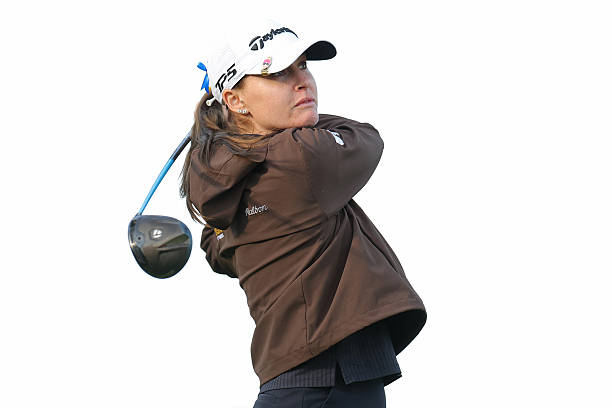
Charley Hull lieferte beim Walmart NW Arkansas Championship presented by P&G eine solide Auftaktrunde ab – und offenbarte danach, dass sie sich mit Mandelentzündung und Grippe durch den Solheim Cup gequält hatte und beinahe gar nicht erst angetreten wäre.
„Letzte Woche habe ich zu Hause fünf Tage lang keinen Golfball angefasst, weil ich bettlägerig war – mir ging es so schlecht", sagte Hull. „Nach dem Solheim Cup hatte ich die Grippe, mir war übel, und ich hatte fast daran gedacht, diese Woche auszusteigen, weil ich das Gefühl hatte, nicht gut genug vorbereitet zu sein." capturengo.com
„Ich hatte das gesamte Solheim-Cup-Wochenende eine Mandelentzündung", gestand Hull. Während das Team nach dem Sieg feierte, zog sie sich früh zurück.
„Nach so einem Event steckt man ein bisschen im Tief – der Adrenalinabfall, und letzte Woche war dann der Absturz. Aber diese Woche fühlt es sich eigentlich schön an, auf den Platz zu gehen, ohne diese überwältigenden Nerven, die der Solheim Cup mit sich bringt."
Hull traf erst am späten Dienstagabend in Arkansas ein, nachdem sie noch bis Dienstag Sponsorenverpflichtungen absolviert hatte. Dennoch resümierte sie gelassen: „Es war nicht gerade die beste Vorbereitung, aber ich bin hier ohne Erwartungen reingegangen und hatte das Gefühl, dass ich von Abschlag bis Grün ziemlich solide gespielt und ordentlich geputt habe."
Für den Höhepunkt der Runde sorgte Loch 17: Hull spielte einen Chip aus dem Bunker, der auf einem auf dem Grün liegenden Blatt landete, darüber rollte und im Loch verschwand. Ihr Kommentar an Caddie Adam: „Großartiges Lesen, Adam!" („Great read, Adam!")
Die besondere Atmosphäre des Turniers schätzt Hull seit Jahren. „In Amerika hat man sonst nicht dieses Dorf- und Kleinstadtgefühl, das ich aus England kenne. Hier spüre ich, dass die ganze Gemeinschaft hinter dem Event steht – das fühlt sich an wie eine englische Kleinstadt. Das mag ich sehr."
Dieser Beitrag wurde mit Unterstützung von KI erstellt und redaktionell geprüft.
The post Mandelentzündung und fünf Tage im Bett: Charley Hull enthüllt Gesundheitskampf nach dem Solheim Cup appeared first on Golf Post.
A running tally of the most ridiculous things AI bigwigs have said so far
If there's anything the leaders of the AI era love more than watching the billion-dollar valuations of their companies tick up, it's warning us that the software making them rich might just destroy the world.
AI is going to kill us all. Now, can we have more money for data centers, please?
Their next favorite activity? Coming up with trendy phrases that either explain how toooootally smart the next upcoming AI model will be or justify why their previous claims of imminent AI sentience haven't quite arrived on schedule.
These buzzwords and prognostications are hard to keep track of and even harder to parse. With new whoppers arriving every week, we're spinning up a running log that we can reference whenever we need to recall how often AI thought leaders contradict themselves and each other, and how constantly they move the goal posts.
We'll update this blog whenever we notice a particularly absurd, empty, or unbelievable remark from an industry whose astronomical valuation is entirely down to the dubious claim that large language models are both going to destroy and save humanity. We're starting with just the last couple months of gobsmacking quotes, because going much further back would be too miserable.
But first, it might be helpful to set the stage:
8 times AI guys declared AGI was right around the corner:
AGI, or "artificial general intelligence," is often cited as a goal for AI development and spoken of with near-mythical reverence. Here's how OpenAI describes it:
"If AGI is successfully created, this technology could help us elevate humanity by increasing abundance, turbocharging the global economy, and aiding in the discovery of new scientific knowledge that changes the limits of possibility.
"AGI has the potential to give everyone incredible new capabilities; we can imagine a world where all of us have access to help with almost any cognitive task, providing a great force multiplier for human ingenuity and creativity.
"On the other hand, AGI would also come with serious risk of misuse, drastic accidents, and societal disruption. Because the upside of AGI is so great, we do not believe it is possible or desirable for society to stop its development forever; instead, society and the developers of AGI have to figure out how to get it right."
- September 2026: Jensen Huang says "GPT-6 Astra, trained on ~100K+ NVIDIA Grace Blackwell NVLink72. From ChatGPT to o1 to Astra in 4 years. AGI has arrived. Congratulations @OpenAI team"
- August 2026: "Altman [said] OpenAI was 'not quite yet' there, but that by the end of the year the company would have an internal system he would call AGI"
- December 2025: "Musk said that xAI could achieve artificial general intelligence, which matches or exceeds human intelligence, in the next few years, even as soon as 2026"
- January 2025: Google's Demis Hassabis says "I think we're probably three to five years away"
- November 2024: Altman says AGI is coming in 2025
- April 2024: Elon Musk says "If you define AGI (artificial general intelligence) as smarter than the smartest human, I think it's probably next year, within two years"
- March 2024: Nvidia's Jensen Huang says "If we specified AGI to be something very specific, a set of tests where a software program can do very well—or maybe 8% better than most people—I believe we will get there within 5 years"
- October 2023: Google's Blaise Agüera y Arcas and Stanford's Peter Norvig declare "Artificial General Intelligence is already here"
Buzzword alert: "Pace the Frontier"
What the heck does that mean? Slowing the rate of AI advancement, because it's supposedly progressing at a dangerous rate.
When did they really start using it? July 2026
The catalyst: A statement from 1,386 employees of frontier AI companies titled Pacing the Frontier:
"We request that the U.S. government support an international effort to develop the technical and governance tools needed to deliberately pace the frontier of automated AI development."
Buzzword alert: Recursive self-improvement
What the heck does that mean? AI systems being advanced enough to develop new, improved iterations of the technology alongside or in place of humans.
When did they really start using it? June 2026
The catalyst: As AI companies begin to distance themselves from the previous goal post of achieving "artificial general intelligence," this has become the new promised land. Anthropic's post "When AI builds itself" kicked it into high gear:
"For most of AI’s history, humans drove every step in its development cycle. But at Anthropic, we are delegating a growing share of AI development to AI systems themselves, which is speeding up our work.
"Taken far enough, and given enough compute, that trend points to an AI system capable of fully autonomously designing and developing its own successor. This is called recursive self-improvement. We are not there yet, and recursive self-improvement is not inevitable. But it could come sooner than most institutions are prepared for."
WEC Fuji 2026: Hyperpole wegen Regen abgesagt, Alpine auf Pole
Burns‘ 8-Eisen dreht das Spiel: US-Trio blickt beim Presidents Cup auf entscheidende Momente zurück
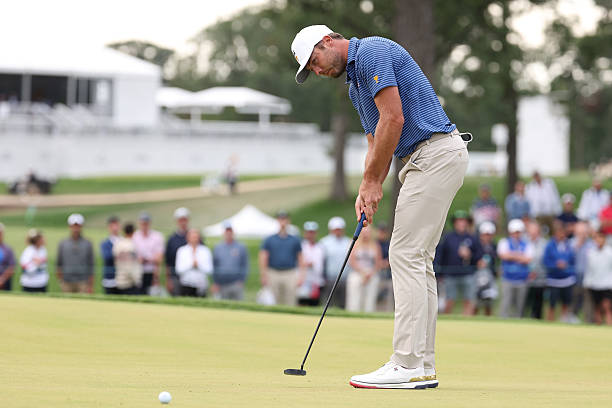
Ein präziser 8-Eisen von Sam Burns auf Loch 14 brachte das entscheidende Momentum im Match von Scheffler und Burns zurück – und Wyndham Clark sprach offen über sein Comeback nach einem bitteren Ryder-Cup-Jahr.

Der Schlüsselmoment: Burns' 8-Eisen auf Loch 14
Nachdem Scheffler und Burns Loch 13 abgegeben hatten, fand Burns auf der nächsten Bahn die perfekte Antwort. Aus etwa 172 Yards spielte er einen 8-Eisen mit einem kontrollierten Fade von rechts, um den Ball in den Aufstieg zu spielen und sanft zur Fahne rollen zu lassen. „Es war einer jener Schläge, bei dem man eine klare Vorstellung davon hat, was man tun will – und sobald ich getroffen hatte, kam der Ball genau so raus, wie ich es wollte", sagte Burns. Der Ball rollte auf Tap-in-Distanz heran – entscheidendes Birdie.
Scheffler, der nach seinem zweiten Schlag auf Loch 14 praktisch aus dem Loch war und Burns in einer Zwei-gegen-eins-Situation allein kämpfen ließ, schilderte die unmittelbare Reaktion auf der Caddie-Seite: „Als Teddy und ich den Klang gehört und den Flug verfolgt haben, haben wir beide laut aufgegaspt – ich wusste sofort, dass der Ball auf zwei Fuß gehen würde. Es war wirklich schön und an diesem Punkt des Matches sehr wichtig." („When we heard the sound and watched the flight, I was like, yeah, that ball is going to go to a couple feet. It was really nice, really important at that point in the match.")
Burns und Scheffler hatten zuvor bereits öfter gemeinsam gespielt, ohne die erhofften Ergebnisse zu erzielen. Den gemeinsamen Punkt beim Presidents Cup habe er daher auch als echte Erleichterung empfunden. Scheffler schloss sich knapp an: „Mein Partner spricht auch für mich."
Clark: Offene Worte zum Ryder-Cup-Jahr und Coach Pat
Für Wyndham Clark war die Teilnahme am Presidents Cup eine besondere Genugtuung. Im Vorjahr hatte er den Ryder Cup verpasst – und machte dabei keinen Hehl aus seiner damaligen Stimmung: „Ich war offensichtlich stinksauer, dass ich es nicht ins Team geschafft hatte. Die ersten paar Tage habe ich den Ryder Cup nicht geschaut, weil ich ein bisschen sauer war – nicht wegen des Picks, sondern einfach, weil ich ein so schlechtes Jahr hatte." Als die USA am Sonntag einen Rückstand aufzuholen begannen, schaltete er doch ein und feuerte seine Freunde an.
Den Schlüssel zu seiner Formwende sieht Clark bei seinem Trainer: „Ich muss wirklich meinem Swing-Coach Pat sehr viel Anerkennung zollen. Er hat mich von einem wirklich schlechten Punkt in meinem Schwung zu einem stabilen Punkt gebracht, an dem ich jede Woche konsistent sein kann – vom Abschlag, aber vor allem ins Grün. Und wenn es mal nicht stimmt, kann ich es schnell korrigieren."
Burns erklärte, wie viel er allein durch das Beobachten von Scheffler bei der Vorbereitung und auf dem Platz gelernt habe. Gleichzeitig habe die Arbeit mit seinem eigenen Coach darin bestanden, seinen Schwung zu vereinfachen und konsequent das zu spielen, was für ihn funktioniert.
Clark zog am Ende ein emotionales Fazit über den Reiz solcher Teamevents: „Ehrlich gesagt ist es eher eine Belohnung am Ende des Jahres, dass wir zusammenkommen und füreinander kämpfen können, statt gegeneinander."
Dieser Beitrag wurde mit Unterstützung von KI erstellt und redaktionell geprüft.
The post Burns‘ 8-Eisen dreht das Spiel: US-Trio blickt beim Presidents Cup auf entscheidende Momente zurück appeared first on Golf Post.