 English
 Indian
 العربية
 Español
 Deutsch
 Türkçe
 Русский
 Français (Afrique)

I suck at Overwatch but I was dominating with new hero Doctrine, so I smell a nerf coming
Whenever I play Overwatch with my friends and actually contribute to our success, I'm treated like a child who's 'helping' his parents put away groceries and manages to put the cheese in the right fridge drawer for a change. In short, I suck.
Even when I'm in the zone as my main man, Reinhardt, I'm not sure I've ever gotten MVP in the hundreds of matches I've played over the years. It was to my great surprise, then, that I found myself dominating as new support hero Doctrine over the weekend at BlizzCon 2026.
Don't get me wrong; I still didn't get MVP in the handful of matches I played. But I was surprisingly competent for someone who A) sucks, and B) had never played Doctrine before. Even without much time to get a good handle on the hero's moves, Doctrine's primary ranged attack, speed, and healing speed-buffing drones were so intuitive that my Quick Play performance made me feel like I wasn't being carried for once. afsport.lat

Unfortunately, I have a hunch that I didn't suddenly 'git gud', synchronizing with Doctrine's life energy as a lover of all things vampire myself. No, my impression after a few surprisingly great rounds as Doctrine is that a big, fat, bloodsucking nerf is probably waiting around the corner to take the wind right out of my sails.
Jack of all trades
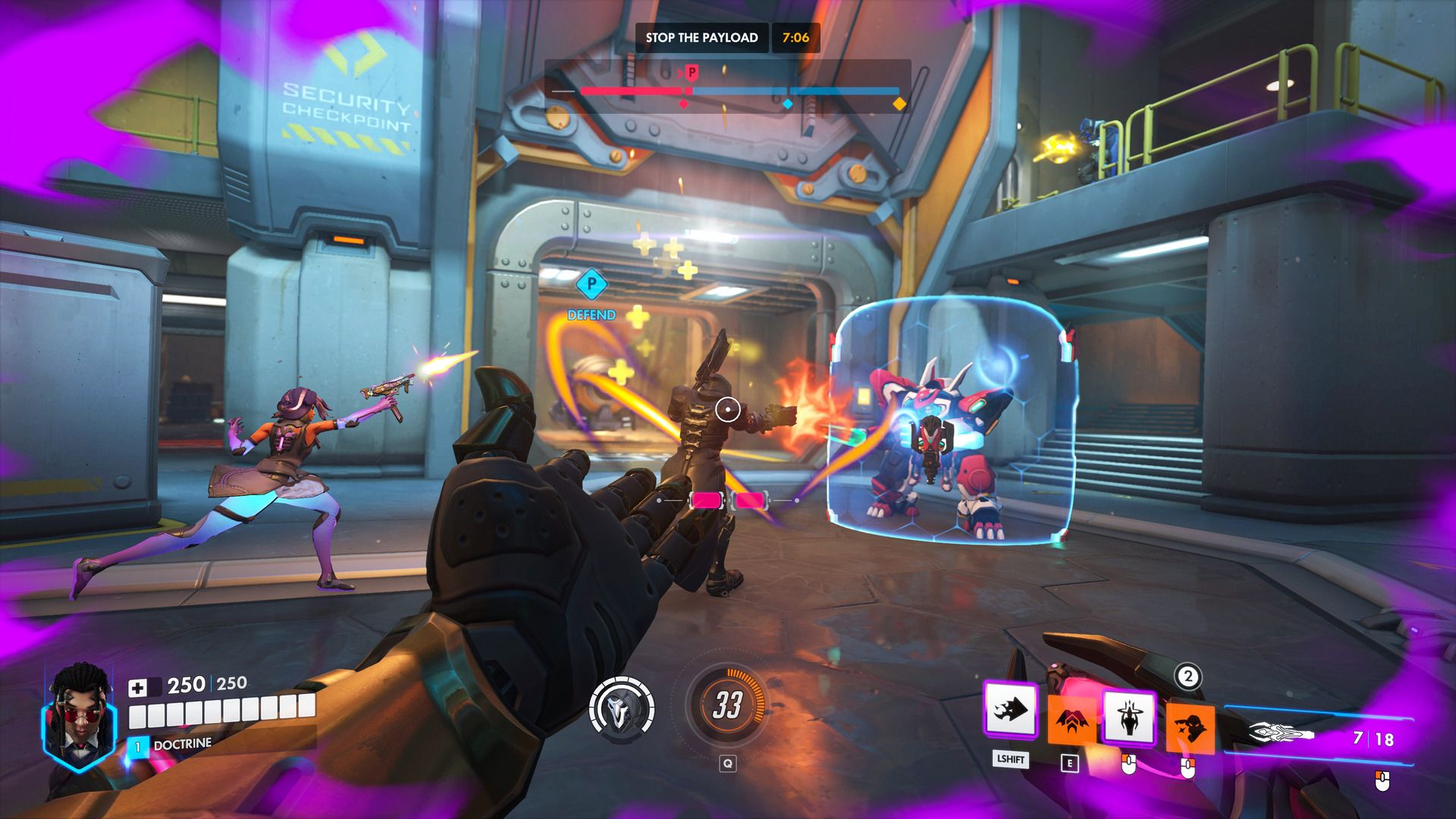
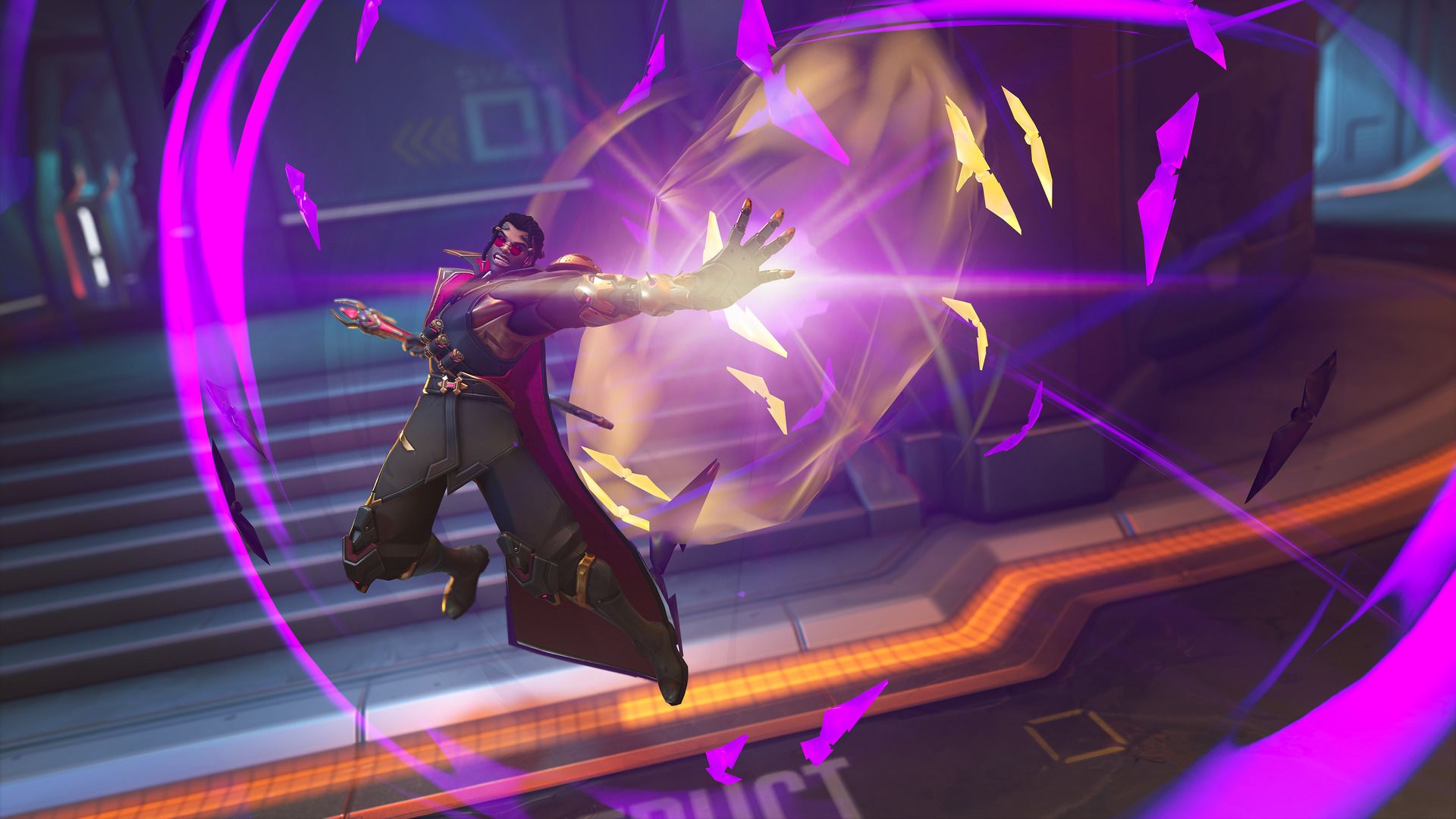
What surprised me the most about Doctrine is just how incredibly well-balanced he is. With great mobility bolstered by straight-up flight via Infuse, solid DPS for a support, flexible engagement range, and an Ultimate with a nasty HP debuff and simultaneous team heal, it's hard to identify a major vulnerability in the vamp's toolkit.
I foresee his Deliverance Ultimate specifically becoming a real problem as players familiarize themselves with his abilities. It's probably going to be one of the main targets of the hero's inevitable first balance update. Meanwhile, Infuse changing the character's rush and drone abilities makes Doctrine a tough hero to predict and counter. With a perk that dramatically reduces Infuse's damage and healing cooldowns, that unpredictability becomes, well, even more unpredictable.
I brought up Doctrine's versatility in a conversation with Overwatch game director Aaron Keller. He pointed out the new hero's high aim skill floor as a potential downside, while ultimately agreeing with me about "flexibility."
"You need to have pretty high aim right there," Keller says. "He also has a pretty decent amount of mobility as well. He can get in, get out, get to high ground if he infuses his dash. So, I think that there's a lot of flexibility with somebody like Doctrine." Asked specifically what meta niche is being filled by a highly-adaptable hero like Doctrine, Keller says he's "not exactly sure who he's going to replace or what the best synergy is here," but "he's going to be versatile and powerful enough to where he gets incorporated into the meta."
Not another Jetpack Cat
Keller says it's a dangerous game, predicting how a new hero will be perceived – balanced, underpowered, or overpowered – because while the dev team tests out roster additions "a lot," it's still "just a team of a couple hundred people" all operating at "different skill levels."
Still, he insists players will grapple with Doctrine's "high skill cap" and strategic design, hopefully preventing all-out support meta dominance similar to Jetpack Cat at launch. "There's aim skill, and there's a lot of strategic decision-making that you need to do with how and when you're going to use Infuse," he explains of Doctrine's playstyle. "It'll be interesting to see if this becomes one of those heroes that is just played a ton at the high level and maybe played a little bit less at lower levels, or if he's played all over the place," Keller tells me.
If Doctrine really is the easy-to-learn but tough-to-master hero Keller says he is, that's terrifying. In other words, if a scrub like me was able to become a respectable, even valuable, team-player in my very first games as the new hero, imagine his potential in the hands of someone who actually knows what they're doing after six months in Ranked queues? That's why a nerf feels all but guaranteed once Doctrine officially joins the Overwatch roster on October 6.
If Overwatch isn't your thing, be sure to check out our ranking of the best FPS games to find your new obsession.
The Last of Us director apologizes for using God of War Laufey as an example of "lack" of innovation in AAA: "This isn't the team's fault"
Naughty Dog veteran Bruce Straley has issued a public apology to the God of War Laufey developers at Santa Monica Studio after using the game to illustrate how AAA production has stagnated in an interview with Edge, as part of a feature now available to read in the magazine's Knowledge newsletter.
"I want to apologize to the Laufey team for dragging you all into this uninvited & unnecessary negative attention," Straley writes in a September 18 Twitter post. "I was trying to illustrate an industry concern & my mistake of naming your game is being used out of context & for clickbait. You don't need this. I'm sorry."
Let me remind you of the original context. Straley spoke to Edge for issue 428 – currently available for purchase – about how he finds AAA development, and especially the money men that fund it, "boring." He mentioned God of War Laufey as a big-budget title he finds visually attractive but seemingly unsatisfying in gameplay, saying, "Every pixel is mindblowing. The amount of work and skill that's gone into every single frame… I've made those kinds of games, and I'm still blown away."
"But," he added, "when I actually look at what you're doing in the game? I'm not excited."
Straley disclaimed at the time, "That's nothing against the God Of War team. Just, across the board in AAA, it feels like there's no opportunity to inject fresh, innovative ideas."
So now, the game vet behind behemoths like The Last of Us and Uncharted 2 doesn't quite take back what he said, but he is more repentant.

Straley reiterates in his Twitter thread that, during his Edge interview, "I mentioned a few concerns. One being the lack or innovation & risks taken in the AAA space. Tho this isn't the [God of War Laufey] team's fault! My fear is that our player base is getting tired of playing the same verbs for the last 20 years."
He names other examples, including his own work, as what formed "the 'modern AAA' mold";
"Half-life 2 was released in 2004, [Gears of War]: 2006, Bioshock: 2007, Uncharted 2: 2009, The Last of Us: 2013," Straley says. "Each felt like they were trying to create a new experience within AAA."
But too many executives would rather chase fleeting live-service success in the hope of becoming the next Fortnite rather than take a chance. A truly innovative game has the potential to stick around as long as Half-Life 2, but the fact that these types of games rarely get the AAA red carpet "frankly shows these 'industry leaders' don't know their own brand," Straley says.
The developer continues, "Hot take: There's a lack of good leadership, clear direction & conviction from the ppl at the top, in charge of the money. (Money = stability) I believe if they understand their brand, they could have honest, inspiring conversations w creators to steer our medium to innovate." I don't think that's controversial to say at all. But Straley maintains that, "In trying to have a thoughtful conversation I stuck my foot in my mouth & mentioned Laufey, and that was my mistake."
"The craziest numbers I've seen in 17 years working at Blizzard": WoW Forever devs seem genuinely shocked the beta is so popular as they explain why their MMO servers keep breaking
World of Warcraft has been running for 22 years, and even now Blizzard sometimes struggles to keep up with demand. Yesterday, the WoW: Forever beta launched and immediately broke under the weight of everyone trying to get in at once. How is this still happening when Blizzard has decades of experience with launching new MMO content? The devs themselves say they were genuinely taken aback by just how popular the Forever beta has been.
"Man, it was hard to sleep last night, I was so excited," senior game designer Josh Greenfield says on Twitter. "Beta has been... crazy. The craziest numbers I've seen in 17 years working at Blizzard and almost 8 years on classic. We've got something really special here."
Maybe that sounds hyperbolic, but senior game producer Tom Ellis has posted a more exhaustive technical breakdown of what went wrong for the opening hours of the Forever beta. "It's not a Production stack by a long, long, long, long, long, long shot," Ellis explains on Twitter. "Betas for WoW aren't usually huge meter movers so this environment just isn't that powerful."
Because "our little BETA environment only uses one REGIONAL realm," Ellis says, math on the servers started getting screwy as this one little connection point was suddenly having to funnel in so many players. This is why people kept getting disconnected after sitting through the lengthy login queues.
It took the devs "around half an hour" to figure out that this was the bottleneck, because the game and Battle.net services both showed very little load. "We all recognized we need more logging and notifications when this system is kicking in, but this is the first time anyone's seen it kick in when [there] wasn't an obvious CPU issue to go along with it," Ellis explains. "20 years, always something new."
Alright, now the dust has settled and you're just happily playing away, let's answer the most common question I've seen.1. AHMAGERD, this game is 20 years old, how do you still suck at this!?!a. Heh, fair enough, sort answer is, this is our BETA PTR environment stack, it's not…September 18, 2026
Ellis also addresses the long times players were experiencing while looting, accepting quests, and performing similar server-bound actions. "Our intrepid Oracle Database Engineers had to perform a manual analyze on all the tables and setup some automated jobs to periodically keep doing it," but because the servers were being hit so frequently, the typical rate wasn't sufficient. As soon as the devs addressed that, the database performance "cleared up instantly."
There were the restarts. "A few hours in, we noticed our WORLD pools that run, well, the game simulation you play on, were running crazy hot on CPU and almost out of memory," Ellis explains. Empty maps were not being correctly shut down, and those were slowly – or, actually, "not that slowly" – clogging up CPU and memory on the servers. The devs figured out a fix, but that fix needed restarts "to pick it up." Blizzard also took the opportunity to add additional worlds and expand the regional service for further stability.
Back in 2019, we interviewed numerous devs about why big online games always seem to break at launch, and it seems that all the same problems inevitably crop up. We heard one dev say "it's just impossible" to fully solve these kinds of launches, and WoW: Forever demonstrates how new issues crop up every single time. But hey, at least the fixes are coming faster. I'm old enough to remember when people were struggling to play Diablo 3 for weeks after launch…